
An Orange County Homecoming
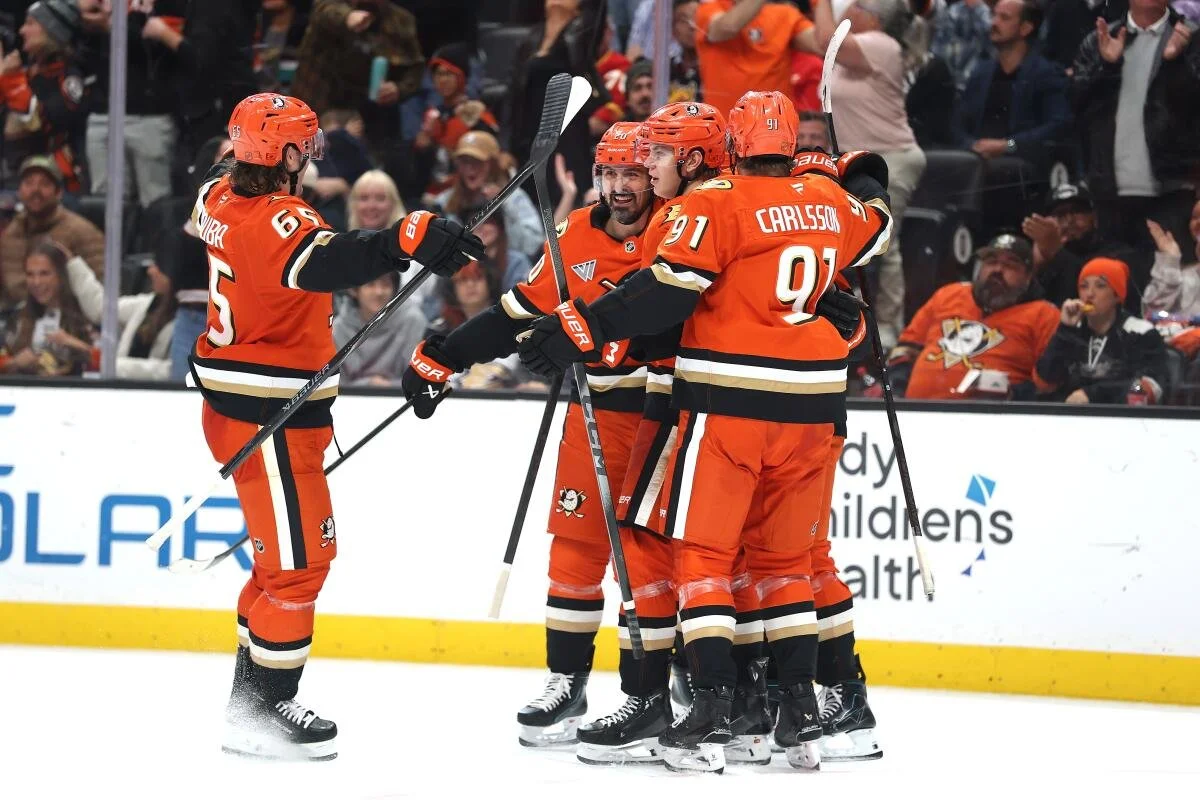
It’s been 2,924 days. Eight years of missed playoffs for the Anaheim Ducks.
The 2017-18 NHL season, a year capped off with an embarrassing sweep at the hands of the San Jose Sharks, marked the beginning of what many fans expected to be, at best, a retool of the roster.
Aging players, slowly worsening underlying numbers, and the taste of Randy Carlyle 2.0 turning sour signaled that there would likely be a couple of missing years after putting together five straight playoff seasons with two Western Conference Finals appearances.
Oh how naive we were. Yet, nearly a decade later, after multiple refusals to rebuild, a scandal-plagued General Manager and changing of the guard, three head coaches, and multiple top three picks, the Anaheim Ducks are back in the Stanley Cup Playoffs.
The return of the most grueling playoff road in North American professional sports signals a new era for the Ducks. It’s one that every fan felt would be attainable in the near future, yet just out of reach.
Rebuilds are a painful process without exception. Nearly every team that has endured a rebuild has languished through many painful years, some longer than others. It comes with the territory.
The hope for a rebuild is to remake the team from the inside out. That can take on different forms, such as turning over the entire roster or cleaning out the front office. Some do one or the other. Most do both, like the Ducks did.
After the floundering showing of the 2018 playoffs, many (including yours truly) saw the writing on the wall and advocated for the team to kick off a rebuild. Unfortunately, Ducks management disagreed. In fact, they disagreed so much that they gave out extensions to veteran players, told free agents they wanted to compete for the playoffs despite being nowhere near capable enough, and rearranged deck chairs on a sinking ship with the acquisition of players who would never be able to power the team back to contention.
In 2021, the Ducks front office finally admitted that they needed to rebuild, with the stated goal of trading veteran players like Rickard Rakell, Josh Manson, and Hampus Lindholm to begin stocking up on future assets — taking the approach of turning over the roster as the primary route. A few months later, General Manager Bob Murray resigned amid allegations of a toxic work environment and alcohol abuse. This forced the Ducks to embrace the other method of rebuild: cleaning out the front office.
That February, the Ducks made their permanent GM hire: Pat Verbeek. His resume not only as a ferocious NHL player, but as right hand man to Tampa Bay Lightning and later Detroit Red Wings GM Steve Yzerman signaled a new dawn in Anaheim.
Verbeek got to work immediately, firing assistant GM Dave Nonis and building a full hockey analytics department (the Ducks were the last club in the NHL to build an analytics team). He immediately traded the pending unrestricted free agents and Ducks mainstays, amassing a stockpile of draft capital and prospects to build upon.
Remember, rebuilds don’t happen overnight. Another year of head coach Dallas Eakins saw the team at the bottom of the standings for the worst season in franchise history. Even though the Ducks famously lost out on hyped 1st overall pick Connor Bedard in the 2022 Draft Lottery despite being the worst team in the NHL, their (at the time) surprising selection of Leo Carlsson at 2nd overall became the first move toward sustained organizational success.
The summer of 2023 gave us Verbeek’s first contract test: coming to terms with Troy Terry as a restricted free agent (RFA) with arbitration rights. The saga gave fans their first look at Verbeek’s and Assistant General Manager Jeff Solomon’s negotiation style — grinding hardass. There seemed to be a significant gap for both sides, with movement on a deal not being made until Terry was physically at his arbitration hearing. The contract ended up at seven years for $7 million average annual value (AAV). Another core piece, one who had been with the team for the entirety of the playoff drought, was locked up long term.
The next year saw Pat Verbeek’s best move to date: pulling off a stunning trade to acquire 2022 6th overall pick Cutter Gauthier from the Philadelphia Flyers in exchange for Jamie Drysdale and a draft pick. Thanks to an entry level contract (ELC) signing dispute with the Flyers front office — one that still isn’t fully understood by the public to this day — the Ducks got what they desperately needed most: a high-ceiling pure goal scorer to be running mates with Leo Carlsson.
As with most rebuilds, there were bumps along the way. Verbeek’s first head coaching hire, Greg Cronin, proved to be a disaster. A stumble after the starting pistol signaling the “build” part of the rebuild.
Then there’s been the prolonged RFA contract negotiations that have reportedly been not fun for the Ducks young talent. The Trevor Zegras trade (not even going to expand on this point because most fans, including myself, are still mad).
And the Joel Quenneville hire. If we’re going to be honest, the Queneville hire has been a significant win for the Ducks if you look at purely on-ice factors. This wasn’t particularly in doubt by most of the fanbase when he was hired last summer.
It’s the baggage of his part in the 2010 Chicago Blackhawks sexual assault scandal that weighs this hire down, with an asterisk next to the success of this year. Though there have been public affirmations of learning, growing, and making amends, we haven’t heard much about progress on that front in recent months. The situation is still fresh, too. It’s completely justified for both fans and outside observers to still look at this hire with disdain.
This is part of the complicated makeup of the 2025-26 Anaheim Ducks. They were a team with low expectations coming into the year that eventually showcased the first significant leap forward in their competitive timeline.
Have they leapt so far forward to become one of the NHL’s top teams? Let’s be real, Connor McDavid called the Pacific the “pillow fight division”. He’s completely right. The Pacific Division champion Vegas Golden Knights wouldn’t have even sniffed the playoffs in the east.
Fortunately, the playoff format in the NHL is what it is. Someone had to make the playoffs in this slumber party of a division. Yes, the Ducks blew the division lead in the last 10 games of the season. Yes, they’re a train wreck defensively. Yes, the goaltending wobbles back and forth between brick wall and single-ply toilet paper.
But the offense has stepped up. The core youngsters are developing. The team looks like it’s having fun again for the first time in a long time. And the knowledge that the team with the most 3rd period comebacks in the league is never out of it has injected a life into this franchise not seen in nearly a decade.
Even if the Ducks don’t make it out of the first round, it’s hard not to consider this season a success. Getting their first taste of NHL playoff action is the next critical step for this young core’s development journey into a consistent contender and driving towards an opening Stanley Cup Championship window.
And for the fans who have been here all of this time. Turning games off early after being blown out by the second period. Watching a rudderless ship for several years before committing to a direction. Your reward is the feeling of actually caring about your team in the spring once again, a feeling unlike any other.
For those who became fans during the playoff drought, we welcome you to the most exciting playoff journey in professional sports. You’ll experience pure euphoria, devastating heartbreak, and heart-pounding anxiety, sometimes all in one game.
To Anaheim Ducks fans both old and new, welcome back to the Stanley Cup Playoffs.